Ramadan and studying in Russia: organising the month calmly
Families often ask this question, and rarely out loud: what is Ramadan like when studying in Russia? The answer is generally reassuring. Fasting in winter is shorter there than in the Maghreb, and the large university cities host long-established Muslim communities. What takes organising is meals and the class calendar.
The length of the fast: winter works in your favour
As the Muslim calendar is lunar, the month of Ramadan shifts by about eleven days each year against the solar calendar. Over the years it therefore moves through every season.
When it falls in winter or late winter, Russian days are short: in cities in the north and centre of the country, the gap between sunrise and sunset is then markedly smaller than in a Maghreb summer. In practice, the fasting day is shorter than in Tunis.
We publish no dates: the start of the month is determined by the lunar calendar and announced locally. Ask the community in your city, and bear in mind that prayer times vary considerably with the latitude of the Russian city where you study.
That last point matters: Moscow’s times are not Kazan’s or Saint Petersburg’s, and the spread is far wider than between two Tunisian cities.
Meals in university housing
This is the real practical issue. Meals are taken before dawn and after sunset, hours that do not necessarily match a university canteen’s.
- Check the access conditions and opening hours of your residence’s kitchen, if there is one.
- Equip yourself with the minimum to cook a simple meal: that is the purchase that changes everything during this month.
- Organise in groups: cooking and breaking the fast together lightens both the workload and the loneliness.
- Shop ahead, avoiding late returns when shops are closed.
Finding suitable food
Halal food is available in Russian cities, but provision varies a great deal from one city to another: it is generally more developed in large conurbations and in republics with a historically Muslim population.
We list no shops or addresses: that information changes too fast to be published on a web page. The right source is local and human: students already settled in your city, and student associations.
Ask on arrival, not in the week Ramadan starts. This is the kind of information that takes an hour to obtain and saves a month of difficulty.
Religious practice in university cities
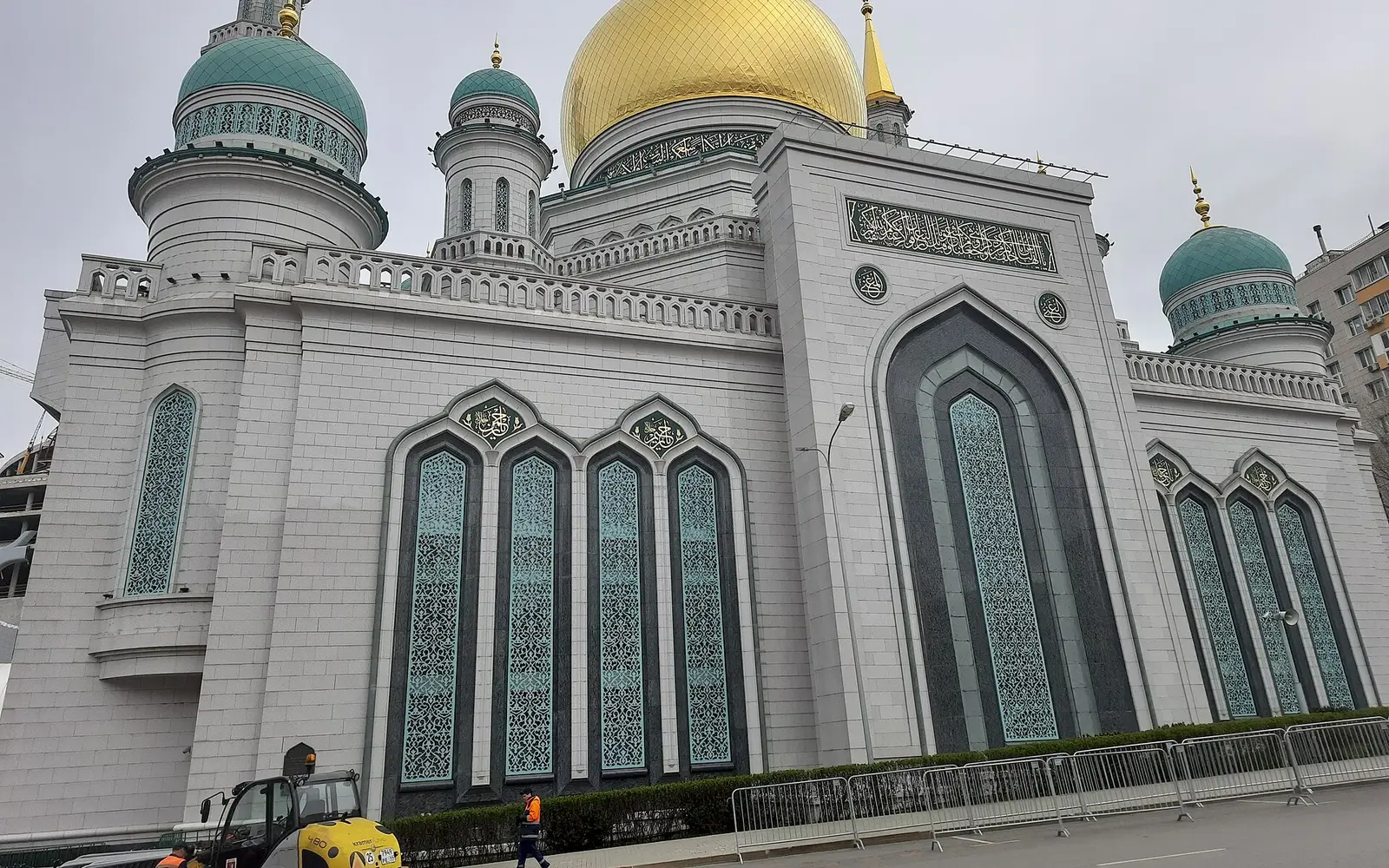
Islam is a long-established religion in Russia, and mosques are present in many cities, particularly in large conurbations and in some republics. The large urban mosques see heavy attendance during Ramadan.
Whether a place of worship exists and how accessible it is depends on the city, however, and we assert nothing institution by institution. Check it directly for the city you are targeting, with students on site.
- Is there a place of worship reachable from the campus, and how far?
- Is there a Muslim students’ association at the university?
- How do students organise breaking the fast on weekdays?
Fasting and the academic calendar
What needs anticipating is not the fast itself, but its possible overlap with an assessment or exam period. Depending on the year, Ramadan may fall in the middle of the spring semester’s assessment period.
- Get your faculty’s calendar at the start of the semester and spot overlaps in advance.
- Move revision forward, before the month starts, rather than counting on the evenings.
- Protect your sleep: lack of sleep, not fasting, is what makes results fall.
Any adjustment of timetables is a matter for each faculty: if a particular situation arises, the right step is to speak to the academic coordinator in advance, not the night before an exam.
Related articleA first Ramadan away from family
This is often the real difficulty, and it is not logistical. The absence of family meals, neighbourhood habits, the atmosphere of the evenings: students tell us about that more than about the fast.
What works, from what we observe: breaking the fast together rather than alone in a room, keeping a daily call with family, and accepting that the first month will be different without being worse.
Related articleFrequently asked questions
Is fasting longer in Russia than in Tunisia?
It depends entirely on the season and the city. When Ramadan falls in winter or late winter, Russian days are short and the fast is shorter than in a Maghreb summer. When it falls in summer the reverse is true, especially in northern cities. Times vary considerably with latitude.
Is halal food available in Russian cities?
It is available but varies by city, generally more developed in large conurbations. We publish no addresses, as they change too fast: ask students already settled in your city as soon as you arrive.
Are there mosques near universities?
Mosques are present in many Russian cities, particularly large conurbations. How close one is to a given campus depends on the city and we do not assert it institution by institution: check it for your target city with students on site.
Do universities adjust timetables during Ramadan?
Adjustments are a matter for each faculty and are not a general rule. If a particular situation arises, speak to the academic coordinator in advance. The most effective approach remains moving revision forward before the month begins.