Tula
Tula is home to 1 of RusStudy's partner state universities. University dorm housing starts at €40/month (or €130/month for a shared apartment), with estimated daily living costs of €160/month.
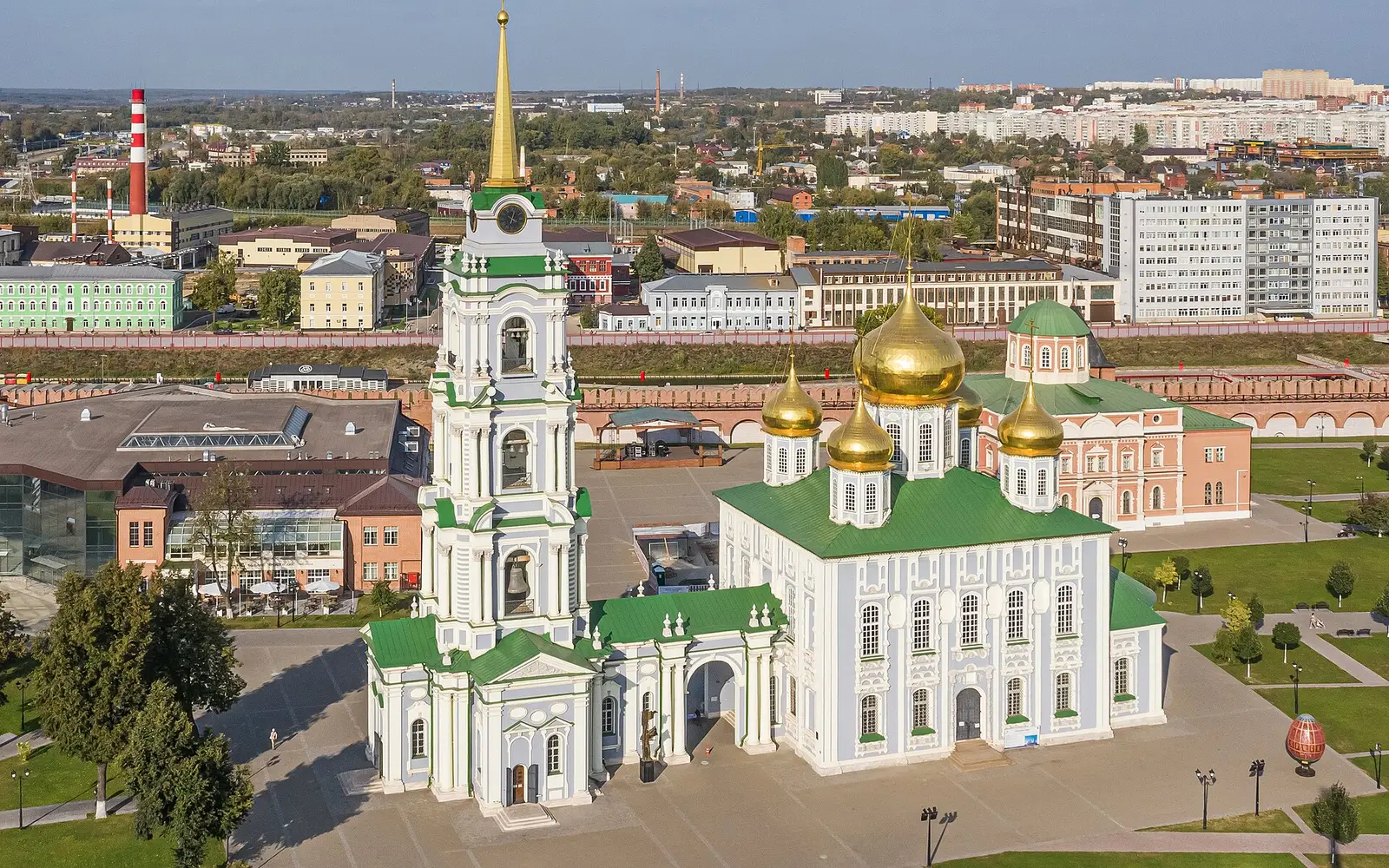
Around 180 kilometres south of Moscow, Tula is the closest to the capital among the regional cities in the network. It is an old industrial city with a sixteenth-century kremlin, famous across Russia for its samovars and its gingerbread.
Universities
Cost of living
| University dormitory | 40 € / month |
|---|---|
| Shared apartment | 130 € / month |
| Monthly living costs (food, transport) | 160 € / month |
Indicative estimate based on 2025 university rates. The final quote depends on the chosen university.
Where Tula is and how to get there
Tula sits on the historic road linking Moscow to the south of the country. Its proximity to the capital is its main practical asset: the train journey takes part of a day, making it easy to reach the international airport on arrival and when leaving for the holidays.
In practice, you land in Moscow and continue by train. It is a simple journey, which students manage without difficulty from the very first time, and it stays inexpensive.
A medium-sized city, and what that changes
Tula is neither a metropolis nor a village. The centre is walkable, daily journeys are short, and you end up recognising faces in your neighbourhood — which is reassuring when you have arrived from another continent.
The downside is real: less nightlife, fewer events, and a narrower retail offering than Moscow. For a student who has come to work, that is often an advantage; for anyone seeking the buzz of a capital, it is a gap.
A markedly lighter budget
This is the central argument for the regional cities, and it is a substantial one. The table above gives the exact figures: both accommodation and living costs sit well below Moscow levels.
Across five or six years of study, the cumulative gap between a regional city and the capital runs to several thousand euros. That is often what separates a viable plan from one abandoned halfway through.
Student life day to day
Halls of residence are generally close to the teaching buildings, sometimes a few minutes on foot. That proximity counts heavily in winter, and it frees up considerable time across a week.
The kremlin, the museums and the surroundings — including the Yasnaya Polyana estate where Tolstoy lived — offer plenty to do at weekends without spending much.
What to know before choosing a regional city
Let us be honest: the Maghrebi community is smaller here than in Moscow or Kazan, and the halal food offering less dense. It exists, but it takes more searching, particularly in the first weeks.
Above all, Russian becomes essential sooner. In a major city you can survive a few months on English; in a regional city the local language asserts itself quickly. That is not a flaw: students who spend their preparatory year there often progress faster, precisely because they have no choice.
The partner university on site
Tula is home to Tula State University, a public multidisciplinary institution. In a city with a long industrial history, technical programmes have a real anchoring: the local economic fabric and the teaching answer each other, which matters for placements and final-year projects.
The detail of programmes, durations and fees is on the page devoted to the institution, reachable from the list at the top of this page.
Frequently asked questions
Is housing guaranteed for studying in Tula?
Yes: RusStudy pre-books your room in secure university residences in Tula before you arrive, monitored 24/7, or guides you toward a shared apartment depending on your budget.
Is there a Tunisian community in Tula?
Yes: RusStudy has local contacts and an active Tunisian student community in each of its partner university cities, including Tula, to help you settle in from day one.