Study in Russia or in Türkiye?
Türkiye attracts many students from the Maghreb, and it is easy to see why: the cultural proximity is real, the community is large and the flight is short. But the entrance selection and the real bill hold some surprises. Here is the comparison, including where Türkiye clearly wins.
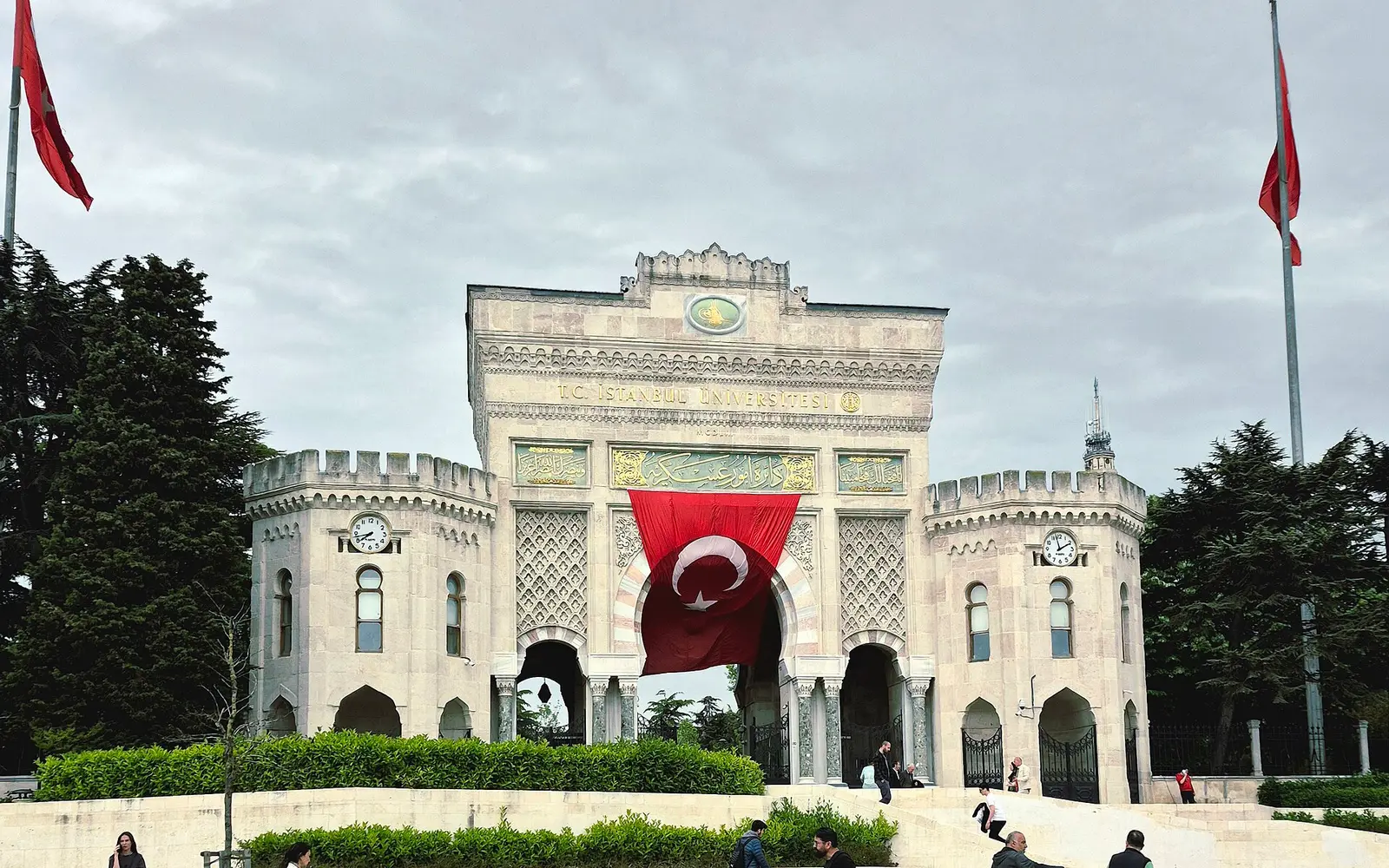
The comparison, criterion by criterion
| Criterion | Russia | Türkiye |
|---|---|---|
| Annual tuition | From €2,200 to €3,500 depending on the programme, published public rate | Highly variable: state universities are far cheaper than private ones, where medicine reaches high amounts |
| Selection method | Admission on school record, with no entrance exam | The YÖS entrance exam is required by many universities, with ranking and quotas per nationality |
| Language of instruction | Russian after a built-in preparatory year, or English depending on the programme | Turkish for most programmes, English in certain, often fee-paying, tracks |
| Accommodation | University dormitory booked in advance, €30 to €90 per month | Public dormitories are in high demand, otherwise the private rental market is far more expensive, especially in Istanbul |
| Monthly cost of living | From €140 to €260 depending on the city | Noticeably higher in the large metropolitan areas, and exposed to strong inflation |
| Intake calendar | September intake plus a complementary February session | A single main intake, aligned with the admission exam calendar |
| Degree recognition | Russian state degree, with an established equivalence procedure in Tunisia | Turkish degree, with an equally established recognition procedure |
The Russian figures are those charged by our partner universities. On the Turkish side, the gap between state and private universities is considerable and rates change quickly: always check with the institution you are targeting before making any decision.
Where Türkiye remains the better choice
- • If cultural and religious proximity is your number one criterion, adaptation is almost immediate
- • If you want to come home often: the flight from Tunis is short and cheap
- • If you already speak Turkish, or if learning Turkish motivates you more than Russian
- • If you obtain a Turkish scholarship, which completely changes the budget equation
Where Russia has the edge
- ✓ No entrance exam to prepare and no ranking to face: admission is decided on your school record
- ✓ A published public rate, identical for everyone, with no public-private gap
- ✓ A university dormitory guaranteed and booked before departure
- ✓ A lower and more stable cost of living, especially outside the two capitals
- ✓ A February session that avoids losing a whole year
How to decide
If you have the time and the level to prepare for the YÖS, and you are targeting a Turkish state university, Türkiye is a very good option. If you want predictable admission, with no entrance exam, a budget announced in advance and guaranteed housing, Russia is the safer route.
Frequently asked questions
Do I need to sit the YÖS to study in Russia?
No. There is no Russian equivalent of the YÖS at our partner universities: admission is based on your school record, with your transcripts and your baccalaureate.
Is Türkiye cheaper than Russia?
It depends entirely on the university. A Turkish state university can be cheaper, a Turkish private university considerably more expensive. On total budget, including housing and cost of living, Russia generally remains more predictable.
Can I find halal food in Russia?
Yes, without difficulty in the large cities and in university towns that host international students. Kazan, the capital of Tatarstan, has a large Muslim population and a very wide offering.